


You can make a good decision and lose money. You can also make a completely stupid decision and get rewarded for it. Follow your plan perfectly, take exactly the setup you were waiting for and you might get stopped out within five minutes. Then watch someone enter late, risk too much, ignore their stop and somehow finish the day in profit.
If you stay in trading long enough, you experience both sides of this yourself. I’ve had trades where I followed everything exactly as I should have and lost, and I’ve had trades in the past where my execution was terrible but the market bailed me out. The dangerous part is that, in the moment, the second one can actually feel better.
This makes learning from trading surprisingly difficult because the feedback you receive from the market isn’t always honest. Profit doesn’t automatically mean you did something well, and a loss doesn’t automatically mean there is something you need to fix.
And yet this is how most of us naturally judge ourselves.
We look at the outcome first.
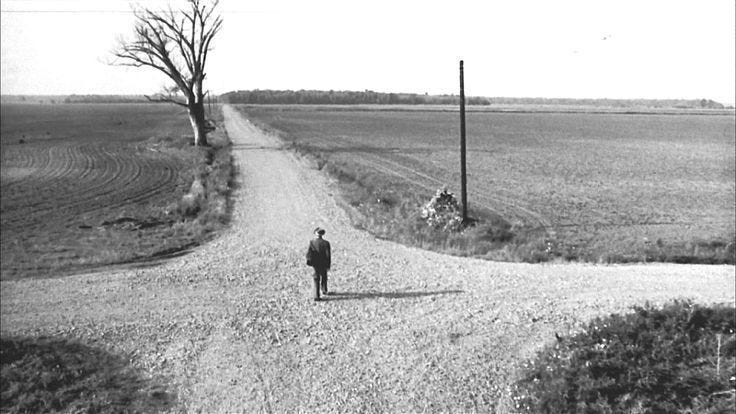
I - Trading Is a Decision-Making Problem
Between 1991 and 1996, finance professors Brad Barber and Terrance Odean studied more than 66,000 brokerage accounts to see how individual investors actually behaved with their money.
One of their findings was pretty simple: the people who traded the most performed considerably worse.
The most active group in the study earned an annual return of around 11.4%, while the market returned 17.9% over the same period. Even the average household in the study, which traded much less aggressively, performed better than the group making the most decisions.
There are obviously differences between long-term retail investing in the 1990s and the kind of trading most of us do today, so I wouldn’t take this study and pretend it proves that trading frequently automatically makes you unprofitable. What I find interesting is the behaviour underneath it.
More opportunities to make decisions also means more opportunities to interfere.
Anyone who has traded for a few years probably knows what this looks like.
You take two losses in the morning and suddenly the third setup needs to make the money back. You miss a move you were waiting for all week and the mediocre setup fifteen minutes later starts looking much better than it really is. You have a great month, confidence goes up, and without really deciding to do it you start giving yourself a little more freedom with entries because you feel like you’re reading the market well.
I’ve done versions of all of these things.
And almost none of them feel irrational while they’re happening.
That is probably what makes them so difficult to catch.
When you move your stop, there is usually a reason. Maybe price hasn’t actually invalidated your idea yet. When you close a winner early, you can tell yourself that you’re managing risk. When you skip the next setup after four losses, being cautious sounds completely reasonable.
Give yourself enough time and you can build a convincing explanation for almost anything you do on a chart.
This was something I misunderstood for a long time. I thought becoming better at trading mostly meant getting better at reading the market. So naturally I kept learning. More price action, more data, more backtesting, more context, more small details that could potentially help me separate a winner from a loser.
Some of that helped a lot. You need to know what you’re doing and you need some kind of repeatable edge.
But eventually there is a point where knowing more stops solving the problems you’re actually having.
You can know your setup extremely well and still hesitate after a losing streak. You can have years of backtesting behind you and still feel the urge to interfere with a position when real money is moving. You can know perfectly well that one trade means almost nothing statistically and still spend the evening thinking about it.
This is where trading became much more interesting to me.
Because once you have a strategy you can actually trust, a huge part of the job becomes learning how to make the same quality of decisions while your emotional state keeps changing.
You have to make decisions when you’re confident and when you’re doubting yourself. After winning trades and after losing trades. During periods where everything seems obvious and during periods where you genuinely have no idea what the market is going to do.
The market doesn’t give you the luxury of knowing which trade will work before you take it. At best, you have a setup that has worked often enough in the past to justify risking money on it again.
For me, accepting that changed the question I was trying to answer.
I became much less interested in figuring out what the market was going to do next and much more interested in whether I could make a good decision with the information I had available right now.
That is a skill you can actually work on.

II - When Should You Trust Your Gut?
After enough time looking at charts, you start noticing things before you can properly explain them.
A setup appears and something about it feels wrong. Technically, most of your conditions are there, but you don’t want the trade. On another day you look at price for a few seconds and immediately understand what you want to see next, even though it would take much longer to explain the reasoning to somebody else.
I think anyone who has spent thousands of hours trading eventually develops some version of this.
The difficult part is figuring out whether that feeling comes from experience or emotion.
In 2009, Daniel Kahneman and Gary Klein published a paper together called Conditions for Intuitive Expertise. It was an interesting collaboration because the two had spent much of their careers looking at intuition from almost opposite directions. Kahneman’s work showed how easily human judgment becomes biased, while Klein had spent years studying experienced professionals whose intuition could be remarkably accurate.
One of Klein’s best-known examples came from his research with firefighters. An experienced fireground commander and his crew were fighting what appeared to be a fairly ordinary kitchen fire when the commander suddenly ordered everyone out of the building. He couldn’t immediately explain what had bothered him. Shortly after they left, the floor collapsed because the main fire had actually been burning underneath them.
There was nothing supernatural about what happened. Over years of attending fires, the commander had seen enough normal situations to notice when something didn’t fit. The room was unusually hot, the fire wasn’t responding the way he expected, and his brain recognized the mismatch before he could consciously put the pieces together.
This is roughly where Kahneman and Klein eventually found common ground.
Experience can produce very good intuition, but simply doing something for a long time isn’t enough. The environment needs to contain patterns that can actually be learned, and you need enough opportunities to practice those patterns while receiving useful feedback about whether your judgment was correct.
That distinction matters a lot in trading.
Imagine someone who has traded for five years but changes strategy every few months, jumps between different markets, takes different setups every week and rarely keeps detailed records. Technically, they have five years of experience. But what exactly has their brain been learning?
Now compare that with someone who has spent those same five years watching one market during the same session, executing a relatively narrow set of setups and reviewing hundreds or thousands of examples afterwards. Their experience is much more repetitive, and repetition gives the brain something useful to compare the current situation against.
This is one of the reasons I think screen time can be incredibly valuable while also being massively overrated.
Ten thousand hours of repeating the same mistake doesn’t automatically create expertise.
The quality of the feedback matters.
Trading makes this especially difficult because the feedback from an individual trade is noisy. You can read the situation well and lose. You can misunderstand everything and still win. If you use the outcome of every trade as your feedback, your intuition can easily learn the wrong lesson.
A winning revenge trade might teach you that aggression works.
A losing A+ setup might make you hesitate the next time it appears.
After enough of those experiences, what feels like “intuition” can simply be a collection of emotional memories you have never properly tested.
Kahneman and Klein made another point that I think traders should pay much more attention to: how confident an intuition feels tells you very little about whether it is accurate. A thought arriving instantly and with complete certainty can still be wrong.
I’ve experienced this myself. There have been days where I felt almost completely certain about what the market was about to do and was wrong, and other days where I wasn’t particularly confident but followed the setup anyway because it was there.
Over time, I’ve learned to give much more weight to evidence than to how convincing something feels in the moment.
If you’ve traded the same setup hundreds of times, documented it properly, reviewed the failures and know the conditions where it historically performs well, your intuition around that setup probably deserves some attention.
If you’ve seen something three times on Twitter and suddenly “feel” like NASDAQ is going to dump, probably less so.
Experience matters.
But only when you’ve actually given your brain something consistent enough to learn from.
III - When Confidence Starts Working Against You
Confidence is strange in trading because you obviously need some of it.
You cannot execute a strategy while questioning every entry, and it is difficult to sit through a drawdown if you have no trust in what you are doing. Most traders who have been around for a while understand this, so becoming more confident usually feels like progress.
There is a point, though, where confidence starts changing the way you make decisions.
Brad Barber and Terrance Odean looked at this in a study of more than 35,000 brokerage households. They were interested in overconfidence and used gender as a proxy because previous psychological research had found that men tended to be more overconfident than women in areas such as finance. In their sample, men traded 45% more than women, and that additional trading was associated with worse net performance. The difference became even larger among single investors, where single men traded 67% more than single women.
The interesting part for traders isn’t really the difference between men and women. It’s what the study suggests about what can happen when we become too confident in the quality of our own information.
We start acting on more of it.
I have noticed this in my own trading as well. Some of my worst decisions haven’t come when I was scared or completely lost.
You have a good month, then another good week, and gradually you start trusting yourself a little more than the process that produced those results. A setup that would normally be questionable suddenly looks good enough. You enter slightly earlier because you are confident about where price is going anyway. Maybe you increase the risk a little because the opportunity looks unusually clean.
None of these changes need to be dramatic. That is probably why they are easy to miss.
Your strategy can remain almost exactly the same while the amount of discretion you give yourself slowly increases.
This is also why a winning streak can be psychologically dangerous in a completely different way from a losing streak. Losses usually make the problem obvious because you feel something is wrong. Winning can hide bad decisions for much longer because the market keeps rewarding them.
Imagine you normally risk 0.5% per trade. One day you see a setup you really like and decide to risk 1%. It wins.
The next time you feel that same level of conviction, risking more becomes easier because you now have evidence that the previous decision worked. After a few experiences like this, what originally began as breaking your rules can slowly become part of the way you trade.
The problem is that the outcome never told you whether increasing the risk was a good decision. It only told you what happened on that particular trade.
This is where confidence becomes difficult to evaluate. When you are uncertain, you naturally look for evidence. When you are extremely confident, you tend to feel as though you already have enough.
And financial markets are a terrible place to stop questioning yourself.
Odean made a similar point in earlier research on individual investors. Investors in his sample traded excessively even though their trading reduced their returns on average. One explanation he examined was overconfidence: people can believe the information behind their decisions is more precise than it really is, which gives them more reasons to trade.
I think this becomes especially relevant once you have some experience.
After thousands of hours watching one market, you genuinely do know more than you did when you started. The difficult part is that there is no clear point where useful experience ends and unjustified certainty begins.
That is why I don’t think confidence should come from believing you know what happens next.
For me, the useful kind of confidence comes from knowing what I will do regardless of what happens next.
I know how much I’m willing to lose. I know what conditions I’m waiting for. I know when the trade is invalid. I know that a loss doesn’t automatically require me to change anything, and I know there will be periods where my read on the market is simply wrong.
That kind of confidence leaves some room for being wrong.
In trading, you need a lot of that room.
IV - A Good Trade Can Still Lose
One of the biggest changes in my trading came when I stopped expecting a good decision to produce a good result every time.
It sounds obvious when you say it like that. Everyone who trades understands probability at least on some level. We know a strategy can have an edge while losing regularly, we know losing streaks are normal, and we know there is no setup that works every time.
Then a loss actually happens and suddenly we forget all of it.
You take a setup exactly according to plan, get stopped out, and immediately start reviewing the chart looking for what you missed. Maybe the entry could have been better. Maybe there was some higher-timeframe level you should have noticed. Maybe the market conditions were slightly different. You keep looking until eventually you find something that explains why this particular trade lost.
The problem is that sometimes there is nothing to find.
In 1988, psychologists Jonathan Baron and John Hershey published a series of experiments on something called outcome bias. Participants were shown decisions made under uncertainty and asked to evaluate the quality of the thinking behind them. Even when people had the same information that was available to the decision-maker at the time, they rated decisions more favorably when the eventual outcome was good and more negatively when it was bad.
The decision itself hadn’t changed. People simply knew how it ended.
I think trading makes this bias especially difficult to avoid because we receive an outcome after almost every decision we make.
You enter a trade and eventually there is a number attached to it.
+$600.
-$350.
+2R.
-1R.
Once that number appears, it becomes very difficult to look back at the trade without allowing the result to influence what you see.
Suppose you break one of your entry rules, take a trade you probably shouldn’t have taken and make 3R. When you review it later, there is a good chance you will be more forgiving. Maybe the setup wasn’t actually that bad. Maybe your discretion was justified. Maybe this is something you should start looking for more often.
Now take the opposite situation. You wait patiently for your best setup, execute exactly where your plan tells you to execute, manage the risk correctly and lose 1R.
Which trade feels better?
Obviously the winner.
Which trade would you want to repeat another hundred times?
That depends entirely on the process behind them.
This is where I think traders can accidentally train themselves in the wrong direction. If every winning trade gets labeled as good and every losing trade gets treated as something that needs fixing, your journal eventually starts rewarding outcomes rather than behaviour.
And the market will occasionally reward some terrible behaviour.
You can move your stop and watch price reverse.
You can revenge trade and recover the entire day.
You can double your risk and catch the biggest winner of the month.
You can ignore your exit rules and make twice as much as you were supposed to.
Nothing about the profit tells you whether you should do any of those things again.
There is research showing just how naturally we struggle with this separation. Baron and Hershey’s original finding on outcome bias has since been tested again in a larger preregistered replication, where participants still rated the same underlying decisions differently depending on whether they were followed by favorable or unfavorable outcomes.
For traders, I think there is a fairly simple way to deal with this.
Judge the trade twice.
The first judgment happens before you know the result.
Write down why you’re taking it, whether it actually meets your conditions, what would invalidate it and anything unusual about the decision. You don’t need to write an essay before every entry. A few lines are enough.
Then review it after the outcome is known.
Now you have something incredibly useful: a record of what you actually believed before the P&L had a chance to change the story.
When I review trading this way, the question becomes much simpler:
Would I want to make this exact decision again if I could repeat the same situation hundreds of times?
If the answer is yes, I don’t need to be disappointed with the decision just because this particular trade lost.
And if the answer is no, making money from it doesn’t suddenly make it a good trade.
That separation is difficult at first because we’re naturally attached to money. Nobody genuinely feels exactly the same after making $1,000 as they do after losing $1,000.
You don’t need to.
You just need to make sure that the emotion attached to the result isn’t deciding what lesson you take from it.
Because over enough trades, you don’t want to become better at repeating whatever happened to work yesterday.
You want to become better at repeating decisions that make sense before you know how they end.
V - Why Taking the Loss Feels So Difficult
There is a behaviour in trading that makes very little sense from the outside but becomes completely understandable once you have money in a position.
A trade moves in your favour and suddenly you become protective of the profit. You start watching every small pullback, thinking about what you could lock in right now, and eventually closing the position feels like relief.
When the same trade moves against you, something different can happen. You become more patient.
You give it another candle. You find another level where price could reverse. The original reason for entering becomes less important because now you are focused on getting back to breakeven. Sometimes the amount of patience you were completely unable to give your winner suddenly appears the moment you’re sitting in a loss.
There is actual trading data behind this behaviour.
In 1998, Terrance Odean published a study using trading records from 10,000 accounts at a large U.S. discount brokerage between 1987 and 1993. He wanted to test something researchers had already started calling the disposition effect: the tendency to realize profitable positions more readily than losing ones.
That is exactly what he found.
Investors in the dataset showed a strong preference for realizing their winners while continuing to hold their losers. Odean also looked at several reasonable explanations for why this might happen. Maybe investors were simply rebalancing their portfolios. Maybe transaction costs made selling certain losing positions less attractive. Maybe the losing stocks were actually better investments going forward.
Those explanations didn’t account for the result.
In fact, the winners investors sold subsequently outperformed the losing positions they decided to keep.
I find this particularly interesting because the behaviour is easy to recognize in trading, even if the original study looked at investors holding stocks rather than short-term discretionary traders.
Once you’re in profit, there is something available to lose.
A trade showing +2R on your screen already feels partly yours. Watching it return to +1R feels different from watching a trade move from zero to +1R, even though you are sitting at exactly the same P&L in both situations.
The path matters.
The same thing happens on the other side. Closing a trade at -1R forces you to accept that the money is gone. Keeping the position open leaves another possibility available: maybe price comes back.
And sometimes it does.
That’s what makes this behaviour so easy to reinforce.
Move your stop once and get saved by a reversal, and your brain has just received a very convincing lesson. Hold a position longer than you were supposed to and watch it return to breakeven, and patience suddenly seems like the reason you survived.
The next time you’re in the same situation, you remember what happened.
This can slowly create a strange asymmetry in the way you manage trades. Winners have to constantly prove they deserve to remain open, while losers are given more and more opportunities to recover.
I don’t think the solution is simply telling yourself to “cut losers and let winners run.” Traders have heard that sentence thousands of times and still struggle with it.
It helps more to decide these things while there is nothing at stake.
Before the trade exists, you can think relatively clearly about where the idea is invalid, how much you’re willing to risk and what conditions justify an exit. Once you’re watching real money fluctuate, those same decisions become much easier to negotiate with yourself.
This is one reason I like having rules that are decided before the session. They reduce the number of conversations I need to have with myself while I’m already emotionally involved in the outcome.
You will never completely remove the feeling that comes with watching a profitable trade come back or accepting a loss.
I’m not sure you need to.
The more useful skill is noticing when that feeling starts changing a decision you had already made before the trade began.
VI - Write It Down Before You Know What Happens
There is something slightly uncomfortable about reviewing old trades when you have enough information recorded from the moment you actually took them.
You realize how much of the story you normally rewrite afterwards.
A trade stops out and, looking at the chart an hour later, the mistake suddenly seems obvious. There was a level you should have noticed, the entry was probably a little aggressive, price had already shown weakness somewhere else. Once you know where the market went, it becomes surprisingly easy to explain why it went there.
The problem is that you didn’t have that information when you entered.
This has been studied for decades as hindsight bias, sometimes called the “knew-it-all-along” effect. Once people know how an event ended, they tend to remember the outcome as having been more predictable than it actually was beforehand.
Trading gives this bias almost perfect conditions.
We have charts that allow us to scroll backwards after every session and inspect the past with information that wasn’t available when the decision was made. Once the candles on the right side of the chart exist, everything on the left starts looking different.
I’ve done this countless times during backtesting and trade reviews. You look at a losing trade and think, how did I not see that?
But hide everything that happened after the entry and suddenly the answer isn’t nearly as obvious.
This is one of the reasons I think a trading journal becomes much more useful when it records decisions rather than simply trades.
Most journals are basically databases of outcomes. Entry, stop loss, target, P&L, screenshot, maybe a short comment afterwards. That’s useful for collecting statistics, but it doesn’t always tell you much about the person who actually clicked the button.
What I want to know is what I believed at that moment.
Why did I take this trade?
Did it completely fit my plan or was I making an exception?
What was I expecting price to do?
Was there anything about the setup that made me uncomfortable?
How was I feeling after the previous trade?
Would I have taken this with the same risk if I was down for the month?
Those answers become much more interesting a few weeks later.
Maybe you discover that the setups you felt least confident about actually performed perfectly well. Maybe your highest-conviction trades weren’t any better than average. Maybe most of your impulsive decisions happened after missing a move rather than after losing money. You might discover that your strategy wasn’t changing nearly as much as your behaviour was.
Without recording some of this beforehand, you are relying on memory to tell you what happened.
And memory already knows the result.
You don’t need to turn every trade into a psychology assignment either. I wouldn’t want to write half a page while an entry is forming. The whole thing can take thirty seconds.
Setup: What am I seeing?
Reason: Why am I taking it?
Invalidation: What would make this idea wrong?
Confidence: How strong does this setup feel right now?
State: Is anything from earlier today influencing me?
Then take the trade.
The interesting part comes later, because now you have two versions of the same event. You have what you believed while the future was still uncertain, and you have what you think after seeing what actually happened.
The gap between those two versions can teach you a lot.
Over enough trades, you can also start checking whether your confidence deserves to be trusted. If you repeatedly rate setups highly and they perform no better than the ones you rate as average, that tells you something. If a certain emotional state keeps appearing before your worst executions, that tells you something too.
This is where journaling became more useful for me.
I don’t want a journal simply to remember my trades. I want it to show me things about my decisions that I wouldn’t have noticed while I was making them.
VII - Assume You’re Wrong Before You Enter
Most of us are very good at finding reasons to take a trade once we already want it.
You see the setup forming, you develop an idea of where price could go, and from that point your attention naturally starts moving toward information that supports it. The level looks clean. Higher timeframe context makes sense. There is liquidity where you expect price to move. Maybe you have seen something similar work several times recently.
By the time you’re ready to enter, you can probably explain the trade quite well.
What we don’t do nearly as often is spend the same amount of effort trying to destroy the idea.
Psychologist Gary Klein developed a simple exercise for this called a premortem. Instead of asking a group what could potentially go wrong with a plan, he asks them to imagine that they are already in the future and the plan has failed completely. Their job is to explain what happened.
The difference sounds small, but it changes how you look at the trade. Instead of collecting reasons why your idea should work, imagine you’re reviewing it later that evening and it turned into one of your worst decisions of the week. What happened? Maybe the setup wasn’t really part of your plan, you were still frustrated by the previous loss, or you increased risk because you felt unusually confident. Maybe you ignored something that didn’t fit your idea. Or maybe nothing was wrong at all - you followed your plan, managed the risk properly and the trade simply lost.
I wouldn’t do this before every entry because you can easily overthink yourself out of perfectly valid setups. I find it more useful when something feels unusual, especially when I’m considering breaking a rule, increasing risk or taking a trade I normally wouldn’t take.
Another question I like is: What would make me regret taking this trade even if it wins? If I double my normal risk and make money, enter outside my trading hours and catch a huge move, or move my stop and eventually get saved, do I actually want to repeat that decision another hundred times?
Some of the worst habits in trading survive because they occasionally work. A revenge trade saves the day, moving a stop prevents one loss, or oversizing produces your biggest winner of the month, and suddenly the result starts justifying the decision. Thinking about how the trade could go wrong beforehand makes it easier to separate those two things.
You won’t predict everything that can go wrong in the market, but you can usually predict the ways you are most likely to make it worse.
VIII - Five Questions Before You Take the Trade
After reading about overconfidence, outcome bias, hindsight bias and all the other ways our judgment can become distorted, it would be easy to think the solution is to analyze every decision even more.
I don’t think that’s particularly useful while you’re actually trading.
When price is moving and money is involved, I want fewer things to think about, not more. So most of what we’ve covered in this letter can be reduced to five questions that are worth asking whenever you’re unsure about a trade.
1. Is this actually my setup, or do I just want to trade?
This sounds almost too simple, but it catches a surprising number of bad decisions. Missing a move, sitting through a slow session or taking an early loss can gradually lower the standard for what starts looking tradeable.
2. What would change my mind?
Before entering, you should be able to identify what would make the idea invalid. If every piece of information can somehow be interpreted as supporting your position, you aren’t really evaluating the trade anymore.
3. Would I still be happy with this decision if it loses?
Imagine removing the outcome completely. If the trade stops out five minutes from now, will you still be able to look at the entry and say that you followed your process? This is probably the simplest way I’ve found to separate decision quality from P&L.
4. Am I trading this setup, or am I reacting to the previous one?
The previous trade has much more influence over the next decision than most of us want to admit. After a loss you may become too cautious or too aggressive; after a large winner, you may start seeing opportunities everywhere. The chart in front of you might be new, but you don’t always arrive at it with a clean mind.
5. Would I take this exact trade if I couldn’t see today’s P&L?
I really like this question because your daily result can quietly change your standards. When you’re down, a mediocre setup can become an opportunity to recover. When you’re up, the same setup can feel like you’re playing with money you’ve already made. Hiding the P&L mentally for a moment forces you to judge the trade on its own.
You don’t need to run through all five questions before every entry. If your setup is obvious and you’re executing normally, there is no reason to create hesitation where none existed. I find them much more useful when I notice myself negotiating with my rules, feeling unusually confident, trying to recover money or searching for a reason to enter something that wasn’t obvious in the first place.
Eventually, that is what better decision-making in trading looks like to me. You still make mistakes, you still misread the market and you still take perfectly good trades that lose, but you become much better at noticing when the decision in front of you is being influenced by something other than the process you intended to follow.
References
Barber, B. M., & Odean, T. (2000). Trading Is Hazardous to Your Wealth: The Common Stock Investment Performance of Individual Investors. Journal of Finance, 55(2), 773–806.
Odean, T. (1999). Do Investors Trade Too Much? American Economic Review, 89(5), 1279–1298.
Kahneman, D., & Klein, G. (2009). Conditions for Intuitive Expertise: A Failure to Disagree. American Psychologist, 64(6), 515–526. https://doi.org/10.1037/a0016755
Barber, B. M., & Odean, T. (2001). Boys Will Be Boys: Gender, Overconfidence, and Common Stock Investment. The Quarterly Journal of Economics, 116(1), 261–292.
Odean, T. (1999). Do Investors Trade Too Much? American Economic Review, 89(5), 1279–1298.
Baron, J., & Hershey, J. C. (1988). Outcome Bias in Decision Evaluation. Journal of Personality and Social Psychology, 54(4), 569–579. DOI: 10.1037/0022-3514.54.4.569.
Aiyer, S., Kam, H. C., Ng, K. Y., Young, N. A., Shi, J., & Feldman, G. (2023). Outcomes Affect Evaluations of Decision Quality: Replication and Extensions of Baron and Hershey’s (1988) Outcome Bias Experiment 1.International Review of Social Psychology, 36(1). DOI: 10.5334/irsp.751.
Odean, T. (1998). Are Investors Reluctant to Realize Their Losses? The Journal of Finance, 53(5), 1775–1798. https://doi.org/10.1111/0022-1082.00072
Fischhoff, B. (1975). Hindsight ≠ Foresight: The Effect of Outcome Knowledge on Judgment Under Uncertainty. Journal of Experimental Psychology: Human Perception and Performance, 1(3), 288–299.
Calvillo, D. P., & Gomes, D. M. (2021). Retrospective and Prospective Hindsight Bias: Replications and Extensions of Fischhoff (1975) and Slovic and Fischhoff (1977). Journal of Experimental Social Psychology, 96, 104154.
Klein, G. (2007). Performing a Project Premortem. Harvard Business Review, 85(9), 18–19.